





Disclaimer: This article provides general information only and is not tax or financial advice. Tax obligations vary by business type and circumstance. We recommend consulting a registered tax agent or visiting ato.gov.au for guidance specific to your situation.
Ap automation software: what it does and how to choose for Australian businesses
Accounts payable is one of the last places in modern finance where manual work still owns the calendar. AP automation software changes that. Not by speeding up the existing process, but by removing the manual steps from it entirely. For Australian finance teams managing GST obligations, ATO record-keeping rules, and supplier payment cycles, the right AP automation software means every invoice is captured, coded, approved, and reconciled with complete confidence.
This guide covers what AP automation software actually does, the features that matter for Australian compliance, the challenges it resolves, and how to evaluate options with confidence.
What is AP automation software?
AP automation software is a category of accounts payable software that replaces manual invoice handling with automated capture, coding, approval routing, and payment execution. It connects the moment a supplier invoice arrives to the moment it clears your books, without your team touching a spreadsheet or chasing an approver.
The scope covers the full accounts payable process automation cycle: document capture via OCR, supplier data validation (including ABN verification), automated GL coding, three-way matching against purchase orders and receipts, approval workflow routing, payment scheduling, and accounting sync. Some platforms focus on one or two of these steps. The strongest AP automation solutions cover all of them in a single workflow.
For Australian businesses, the category sits at the intersection of operational efficiency and compliance. Australian record-keeping rules generally require businesses registered for GST to hold tax invoices for all purchases over $82.50 and retain them for five years from the date of lodgement of the relevant tax return (ATO record-keeping obligations). AP automation software makes meeting that obligation automatic rather than accidental.
What AP automation software actually automates
The distinction that matters is between digitising a manual step and eliminating it. Many platforms scan invoices and store them digitally. That is digitisation. AP automation goes further: it removes the human decision point entirely for routine transactions.
Invoice capture and data extraction
OCR technology reads incoming invoices (emailed PDFs, scanned paper documents, or electronic files) and extracts the supplier name, invoice number, date, line items, GST amount, and total. The result lands directly in your AP system, coded and ready for review. No one types it in.
Abn verification and supplier validation
When an invoice arrives from a new supplier, automated AP systems check the ABN against the Australian Business Register in real time. Invalid or cancelled ABNs trigger an immediate hold. This removes a manual compliance check that most teams either do inconsistently or skip under deadline pressure.
Gl coding and cost allocation
Based on supplier history, invoice type, and business rules your team sets once, the software assigns the correct general ledger codes automatically. For recurring invoices (utilities, subscriptions, regular contractors), the coding accuracy rate reaches near-total consistency from the second invoice onwards.
Three-way matching
For businesses with purchase orders, automated three-way matching compares the purchase order, the goods receipt, and the supplier invoice before any payment is released. Discrepancies are flagged and routed to the right person. Matched invoices move straight to payment approval. No manual comparison, no missed discrepancies.
Approval routing and escalation
Rather than email chains and calendar reminders, AP automation software routes invoices to the right approver based on amount, department, cost centre, or supplier. If an approver does not act within a defined window, the invoice escalates automatically. Every approval decision is logged with a timestamp and the approver's identity, creating a complete audit trail.
Payment scheduling and execution
Once approved, invoices are queued for payment on the due date or according to your payment run schedule. Some AP platforms execute payments directly; others sync the approved payable to your accounting software for final payment. Either way, the scheduling is automatic once approval is complete.
Accounting sync
Every completed invoice (captured, coded, matched, approved, paid) syncs to your accounting system in real time or on a defined schedule. Your Xero or MYOB general ledger reflects the current state of payables without manual data entry at any stage.
Key features to look for in AP automation software (australian businesses)
Not every AP automation software platform is built for the Australian compliance environment. These are the features that separate a genuine fit from a workaround.
Abn verification and validation
Your AP automation software should check ABN validity automatically on every new supplier and flag invoices where the ABN is missing or inactive. Under GST rules, you cannot claim input tax credits on invoices from suppliers with invalid ABNs. Catching this at capture, not at BAS time, protects your GST position.
Gst-compliant tax invoice capture
A valid tax invoice in Australia must include specific fields: the supplier's ABN, the words "tax invoice", the GST amount either separately stated or indicated that the total includes GST, and the date. Your AP automation software should validate these fields at the point of capture and reject invoices that do not meet ATO requirements, rather than passing incomplete documents through to payment.
Three-way purchase order matching
For any business managing purchase-based supplier relationships, three-way matching is non-negotiable. The software compares the purchase order your team raised, the goods receipt or delivery confirmation, and the supplier invoice. All three must align before payment proceeds. This is one of the most direct controls against overbilling and duplicate payments.
Ato-compliant audit trail
Australian record-keeping rules generally require businesses to keep records in a form that allows them to verify the accuracy of their tax return. For AP, that means every invoice must have a complete, retrievable record: original document, capture date, coding applied, approver identity, approval date, and payment confirmation. Your AP automation software should generate and retain this trail automatically for a minimum of five years. Look for platforms that export audit-ready reports in a format acceptable to the ATO on request.
Xero and MYOB integration
The majority of Australian businesses run Xero or MYOB as their accounting system of record. Your AP automation software must integrate natively, not via a third-party connector that requires manual field mapping and periodic reconciliation. Native integration means your chart of accounts, supplier list, cost centres, and payment terms are all available inside the AP platform from day one, and every approved payable posts to the correct ledger automatically.
Supplier portal or self-service onboarding
Rather than your team collecting and entering supplier bank details manually, a supplier portal gives suppliers a direct channel to submit their own details (ABN, bank account, contact) into the system. Your team reviews and approves. The data is clean from the start, and the risk of payment fraud from intercepted email correspondence is significantly reduced.
Configurable approval workflows
Approval rules should match how your business actually operates, not a generic template. Look for the ability to set approval tiers by invoice amount, by department, by cost centre, and by supplier type. The best accounts payable workflow automation tools also support delegated authority during leave periods and automatic escalation when approvals stall.
Multi-entity and multi-currency support
For businesses operating across multiple entities or trading internationally, your AP automation software should handle multiple ABNs, multiple bank accounts, and foreign currency invoices with automatic conversion. Consolidating payables reporting across entities without manual aggregation is one of the highest-value capabilities for finance managers and CFOs overseeing group structures.
Common AP challenges AP automation software resolves
Understanding the before state matters when building a business case for automated accounts payable systems.
Invoice processing backlogs. When invoices arrive by email, post, or supplier portal and require manual data entry, processing time is constrained by headcount. Backlogs build during month-end, during peak trading periods, and whenever a team member is absent. Automated invoice processing software removes the bottleneck at source.
Late payments and supplier friction. Manual approval processes depend on approvers checking email, finding the right document, and responding in time. When approvers are travelling, in meetings, or simply overloaded, invoices sit. AP automation software routes approvals to mobile devices and escalates automatically. Suppliers get paid on time. Discount terms are captured rather than forfeited.
Duplicate payments. Without automated duplicate detection, the same invoice can be processed twice, arriving via different email addresses, file formats, or team members. AP automation platforms check invoice number, supplier ABN, amount, and date against existing records before any payment is processed. Duplicates are flagged before they clear, not discovered in reconciliation.
GST coding errors. Incorrect GST treatment on invoices flows through to BAS errors and potential ATO penalties. When coding is manual, errors accumulate. Automated GL coding applies consistent GST treatment based on rules your team sets once, across every invoice. The BAS reconciliation becomes a confirmation, not an audit.
Lack of visibility for month-end close. When payables data lives in email inboxes and paper filing systems, the finance team cannot see total committed spend until invoices are processed. Real-time AP automation gives every stakeholder (finance manager, CFO, department head) a live view of outstanding payables, approved invoices, and payment runs. Month-end close is a confirmation of what is already known, not a discovery process.
Compliance exposure. Businesses that cannot produce a complete audit trail for their payables (original invoice, coding, approver, payment date) face risk in ATO audit situations. AP automation software creates that trail automatically for every transaction, without any additional effort from the team.
How Australian finance teams use Weel for AP automation
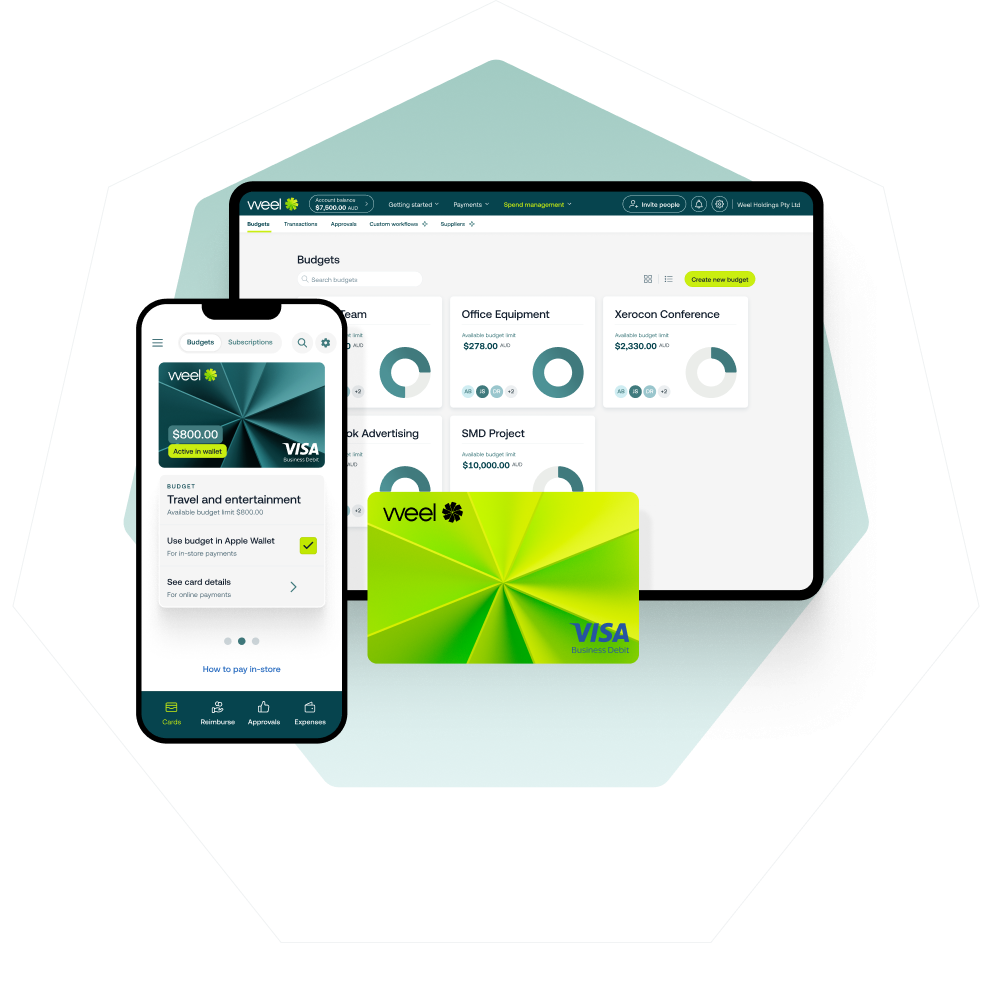
Weel is the AP automation and expense management platform built for Australian businesses. It connects invoice capture, approval workflows, and accounting sync in a single platform, giving finance teams total control over every payable from the moment an invoice arrives to the moment it clears the books.
Invoice capture and OCR. Invoices submitted via the Weel supplier portal or forwarded to a dedicated inbox are captured by OCR instantly. Supplier details, ABN, invoice number, GST amount, and line items are extracted and pre-populated. No manual entry.
Approval workflows with real-time routing. Weel routes every invoice to the right approver based on rules your team configures: by amount, department, or supplier category. Approvers act from their phone or desktop. Approvals that stall escalate automatically. Every decision is logged with a timestamp and is permanently retrievable.
Xero and MYOB native integration. Weel syncs approved payables directly to Xero or MYOB. Your chart of accounts, cost centres, and tax codes are all available inside Weel from setup. Every approved invoice posts to the correct ledger code without manual reconciliation. The median time from invoice approval to accounting sync is measured in hours, not days.
ATO-ready audit trail. Every invoice processed through Weel generates a complete, retrievable record: original document, capture timestamp, coding applied, approver identity, approval date, and payment confirmation. This record is retained and exportable for ATO compliance purposes.
Verified outcomes at scale. Businesses using Weel's approval workflows reach 95% expense completion: every approved invoice accounted for, coded, and reconciled. Over 90% of card expenses reach full manager approval across the 3.9 million transactions Weel has processed. The platform is trusted by 4,000+ Australian businesses managing AP and expense workflows.
For finance managers building a case for AP automation, Weel removes the need to stitch together separate invoice capture, approval, and accounting tools. For CFOs, it delivers a real-time view of total payables across the business: a live ledger at all times, not a snapshot at month-end.
The result is not faster administration. It is accounts payable that closes itself.
Conclusion
AP automation software is not a nice-to-have for Australian businesses managing GST obligations, ATO audit requirements, and supplier payment cycles. It is the difference between an AP function that runs with complete confidence and one that creates risk with every manual step.
The right platform captures every invoice, validates every ABN, routes every approval, and syncs every payable to your accounting system. Automatically. Accurately. With a full audit trail retained for five years.
Weel gives Australian finance teams exactly that. Every invoice complete. Every approval documented. Every payable reconciled.
Book a free demo at letsweel.com/demo and see how your team closes AP for good.
This article is general information only and is not tax advice. We recommend consulting a registered tax agent for advice specific to your business.