





What is EOFY in Australia?
EOFY stands for end of financial year. In Australia, the financial year runs from 1 July to 30 June - a fixed cycle set by the Australian Taxation Office (ATO). June 30 is the end of financial year date, the fiscal year end for Australian businesses, and the end of tax year for most reporting purposes. It is not just a tax deadline date; it is the hard cut-off that determines which transactions, deductions, asset write-offs, super contributions, and payroll events belong to the current year and which roll into the next.
For finance teams, EOFY is an operational event as much as a compliance one. The ATO may not see your internal close process, but your auditors will, your CFO will, and your accounting software absolutely will. Every item on this checklist has a practical finance consequence - receipts that miss the cut-off move to the wrong period, super that leaves your bank account on June 30 may not reach the fund in time, and assets ordered but not yet in use cannot be written off this year.
The June 30 deadline is firm. Work backwards from it.
For the ATO's official key dates calendar, see: ATO key dates for employers - 2026
Phase 1: What to do now - May
The earlier your team acts in May, the less pressure accumulates in the final week. Use this phase to fix the systems and policies that will determine whether June close is controlled or chaotic.
1. Audit your approval chain
Run a report of all open or unapproved expense claims from the last 90 days. Any claim sitting unresolved now will either delay your close or land in the wrong period. Identify which managers have approval backlogs and set a hard deadline: all outstanding approvals completed by May 30.
If your team is using Weel's expense management platform, pull your approval completion report now. Businesses using structured approval workflows reach 95% expense completion - a figure that matters when you are trying to close a financial year, not re-open it.
2. Set and communicate expense cut-off dates
Issue a written policy reminder to every team: the deadline for submitting expense claims for the 2025–26 financial year. A reasonable operational cut-off is June 13 for card expenses and June 16 for reimbursement claims. Document these dates in writing and get manager acknowledgement. Late submissions after these dates will be accrued or deferred - the choice is yours, but it must be deliberate, not accidental.
3. Run your Xero or MYOB integration health check
Before the final fortnight, confirm that your accounting integration is pulling data correctly. Check for:
- Bank feed gaps or duplicates
- Category mapping errors from the last 90 days
- Any expense categories that have drifted from your chart of accounts
An integration fault discovered in the last week of June costs far more in time than one caught in May. Fix it now.
4. Review your FBT position
Fringe Benefits Tax (FBT) year ends March 31, not June 30. However, the FBT return is due June 25. If your team has not already filed, start the FBT data collection process in May: review any non-cash benefits provided to your team (car use, entertainment, gym memberships), calculate the taxable value, and prepare the return for lodgement. Missing the June 25 FBT deadline attracts penalties - it is the one EOFY obligation that precedes June 30.
Phase 2: The final fortnight - June 1–15
This is execution phase. Policies are set, systems are checked. Now your team closes the data.
5. Card expense submission deadline - June 13
Communicate this to every card holder: all card transactions for the financial year must have a receipt attached and a category assigned by June 13. Transactions without receipts cannot be finalised in your accounting system, which means they either sit as unreconciled items or get coded incorrectly at speed on June 30.
Over 90% of card expenses on Weel reach full manager approval - across 3.9 million transactions and 4,000+ businesses. The median time from card swipe to accounting sync is 2.3 days. If your current process is taking weeks, close week will not fix it.
6. Reimbursement claims deadline - June 16
Reimbursement claims submitted after June 16 carry real risk: they may not be approved, processed, and paid before June 30, which means they either miss this year's books or create accrual work for your team. Set June 16 as the hard cut-off for claim submission and June 23 as the deadline for manager approval.
Half of all reimbursements on Weel are paid within 24 hours, and 95% are fully paid. Speed of processing matters at EOFY.
7. BAS preparation
If your business lodges quarterly BAS, the April–June quarter BAS is due 28 July. However, the data that feeds it - GST collected and paid, PAYG withholding, and any fuel tax credits - must be accurate to June 30. Use the first fortnight of June to reconcile your GST position and flag any large one-off transactions that may affect your BAS calculation.
8. STP data clean-up
Single Touch Payroll (STP) data must be accurate before you submit your finalisation declaration. In the June 1–15 window:
- Run a year-to-date payroll summary and check it against your STP-reported figures
- Identify any amendments needed (missed payments, incorrect categorisation, back-pay)
- Lodge STP amendments before finalisation - do not leave corrections until after you submit
Phase 3: Close week - June 16–30
This is the verification and submission phase. By now, the data should be complete. Close week is about confirming it and pressing submit.
9. FBT return - due June 25
If your FBT return has not been lodged, June 25 is the final date. Do not miss it. FBT applies to non-cash benefits provided to your team and their associates, and the ATO takes late lodgement seriously.
10. Confirm super contributions reach the fund before June 30
Superannuation contributions are deductible in the year they are received by the fund - not the year they leave your bank account. This distinction has caught many businesses out.
The practical rule: initiate your June quarter super payment no later than June 23. BECS (bank electronic clearing system) transfers can take two to three business days. If your payment leaves on June 30, it may not arrive before June 30. Your clearing house is not enough - the fund must receive it.
Check with your payroll platform or clearing house for their specific cut-off dates for the June quarter.
11. Instant asset write-off - installed and in use, not just ordered
The instant asset write-off is one of the most misapplied EOFY provisions. The rule is clear: the asset must be installed and ready for use by June 30. An asset that has been ordered, paid for, or is sitting in a warehouse on June 30 does not qualify for this financial year's deduction.
Before June 30, confirm for every asset you intend to write off:
- It is physically installed or deployed
- It is genuinely available for use in your business
- You have documentation confirming installation date (delivery receipts, IT deployment records, photos where appropriate)
If the asset will not be installed by June 30, it moves to the 2026–27 financial year. This is a factual test, not a timing choice.
12. STP finalisation declaration
STP finalisation is due by 14 July for most employers. However, the data it reports - every team member's year-to-date gross income, tax withheld, and super - must reflect June 30 accurately. Submit your finalisation declaration as soon as your last June payroll is complete and reconciled.
Steps:
1. Confirm final June payroll has been processed and STP-reported
2. Reconcile year-to-date STP totals against your payroll records
3. Submit finalisation event through your payroll software
4. Notify your team - they will see their income statement in myGov once you finalise
13. Accounting system sync and year-end close
On or before June 30:
- Reconcile all bank accounts to the closing balance
- Post any required accruals and prepayments
- Confirm all expense categories are correctly coded
- Lock the financial year in your accounting software (Xero, MYOB, or equivalent)
Do not close the year in your accounting system until all transactions are posted and reconciled. A year-end lock with outstanding items creates rework.
Common EOFY mistakes finance teams make
Leaving card receipts until the last week. Missing receipt data in the final days of June forces rushed coding decisions or creates unreconciled items. Set the June 13 deadline and enforce it.
Assuming "ordered by June 30" qualifies for instant asset write-off. It does not. The asset must be installed and ready for use. The ATO applies this test strictly.
Super leaving the account on June 30. Bank transfers take time. If your super payment leaves on June 30, there is a real chance it does not reach the fund before midnight. Initiate by June 23 at the latest.
Missing the FBT deadline. FBT returns are due June 25 - five days before the end of the financial year. Many finance teams treat FBT as a March 31 task and then forget the June 25 lodgement date.
Running STP amendments after finalisation. Amendments after a finalisation declaration create administrative overhead and can delay your team's access to their income statements. Fix STP data before you submit.
How Weel turns EOFY close into a verification step
The scramble at EOFY close is almost always a data problem. Receipts missing. Expenses unapproved. Accounting categories uncoded. Finance teams spend the last two weeks of June doing data collection work that should have happened within 24 hours of each transaction.
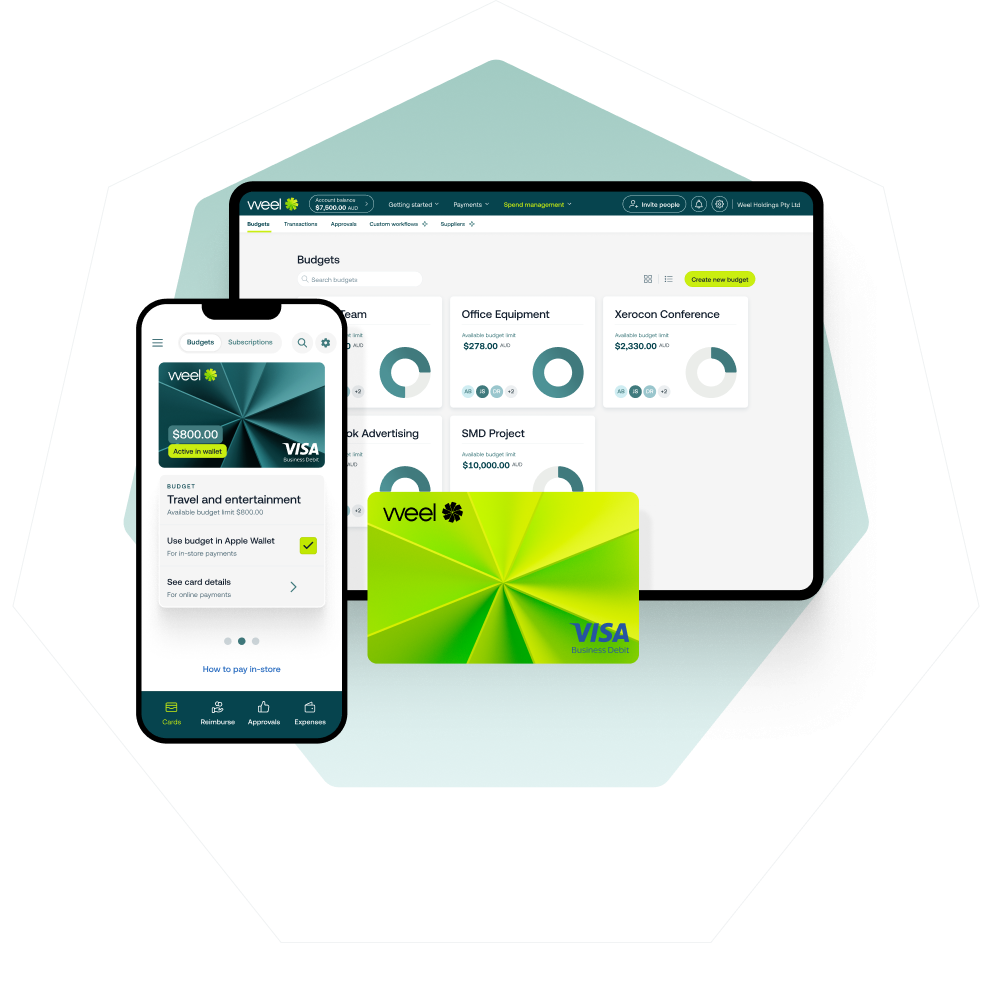
Weel's real-time expense close changes that equation. The median time from card swipe to accounting sync is 2.3 days. Over 90% of card expenses reach full manager approval - across 3.9 million transactions and 4,000+ businesses. When your team uses Weel's approval workflows, expense completion reaches 95%. That means when June 30 arrives, your EOFY close is a verification step, not a salvage operation.
For finance teams running Xero or MYOB, Weel's native accounting integrations push coded, approved expense data directly into your general ledger - no manual export, no re-coding. Every expense is categorised at the point of spend, approved through structured workflows, and synced to your accounting system in days, not weeks.
The result: when your CFO asks "are we ready to close?", the answer is yes - not "almost, just waiting on receipts."
Every Expense Complete.
Conclusion
June 30 does not move. What moves is your team's preparation - and a phased approach is the difference between a controlled close and a last-minute scramble. Use this checklist to work through May (policy and systems), the final fortnight (data submission and BAS prep), and close week (STP, super, write-off confirmation, and year-end lock). Book time now for the tasks that cannot be rushed.
Ready to make EOFY close a process your team can repeat with confidence? Book a demo at letsweel.com/demo.