




Most finance teams already have an expense management system. The real question is whether every expense actually finishes. Receipts go missing. Approvals sit unactioned for days. Reconciliation gets pushed to month-end. A system that doesn't close every loop isn't managing expenses — it's documenting the gaps.
Here's what complete looks like, and why it's the only standard worth measuring your current setup against.
What is an expense management system?
An expense management system is the combination of software, processes, and policies that governs how a business captures, approves, and accounts for company spend. For ANZ finance teams, that typically covers:
- Corporate cards and receipt capture
- Employee reimbursement claims
- Approval workflows and policy enforcement
- Accounts payable and vendor invoices
- Accounting software integration and reconciliation
Most systems handle some of this well. The ones that matter handle all of it — completely — with every transaction moving from spend to approved, coded, and synced without manual work filling the gaps.
The distinction isn't which features appear on a pricing page. It's what percentage of transactions actually finish.
Why completion is the right measure — not automation
The conversation around expense management defaults to automation. What automation usually means is "we reduced some steps." Reduced isn't the same as done.
A receipt captured by AI but never coded is an incomplete expense. An approval workflow that routes the request but leaves the manager to chase the submitter is an incomplete process. Real-time data that still requires a manual export at month-end is incomplete visibility.
Completion is the right standard because it's the only measure that actually closes the books. A 90% completion rate sounds impressive — until you're the finance manager manually chasing the remaining 10%, every single month, for every transaction that fell through.
The five stages of a complete expense loop
A complete expense management system closes all five stages, for every transaction, without manual intervention filling the gaps:
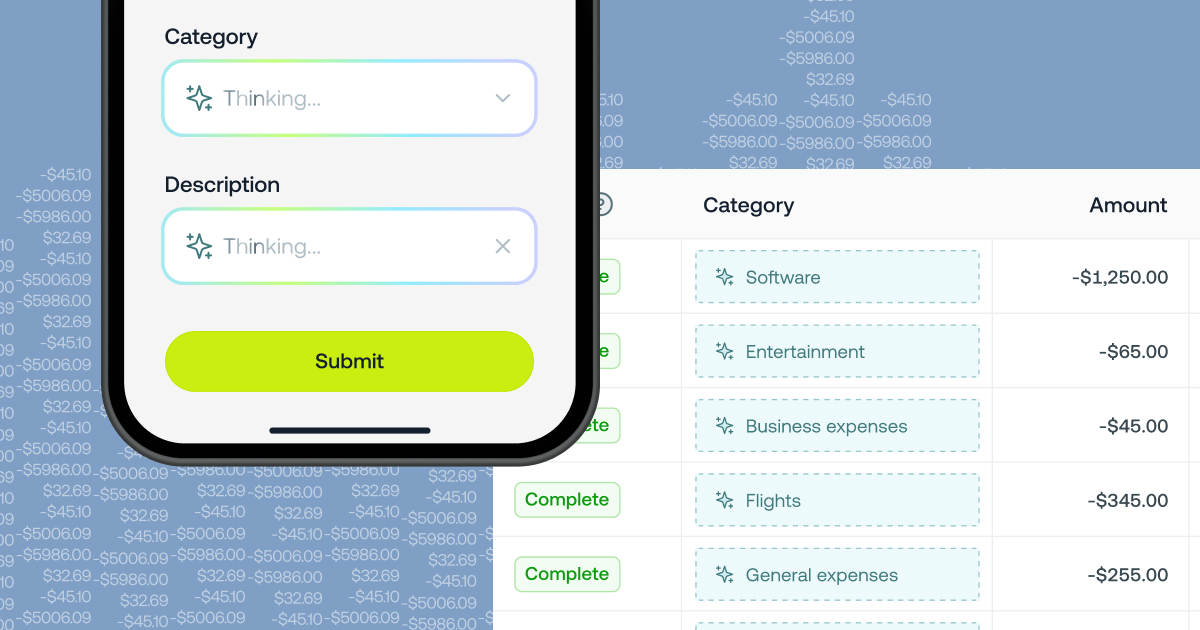
- Capture — The receipt or invoice is recorded at the point of spend. Not uploaded three days later. When Weel AI is active, receipt scanning reads the amount, merchant, and GST status automatically.
- Coding — Category, cost centre, project codes, and GL codes are assigned automatically where possible — or prompted immediately if not.
- Submission — The expense arrives in the approver's queue complete: receipt attached, all fields filled, out-of-policy flags already surfaced.
- Approval — The manager reviews and approves within the workflow's defined window. Not because someone sent a Slack message — because the approval routing enforced it.
- Sync — The approved, coded transaction exports to your accounting software. Xero, MYOB, or NetSuite receives a clean entry with correct GL mapping — not a spreadsheet to reconcile later.
When all five stages close for every transaction, your books don't need month-end intervention. They're already done.
What incomplete really costs your finance team
Every stage that doesn't close automatically becomes manual work for your finance team. Most teams absorb it quietly: chasing receipts over Slack, manually coding expense reports, exporting CSVs the night before close.
The cost isn't one big incident. It's ten minutes per transaction, repeated across every corporate card swipe, every reimbursement claim, every vendor invoice — month after month.
Finance teams with configured approval workflows reach 95% expense completion — seven points ahead of those without. That seven-point gap is the difference between a clean, calm close and a manual follow-up queue that resets every single month.
What to look for in an expense management system
Not all expense management systems are built around completion. When evaluating options, ask:
- What percentage of transactions reach full approval without manual follow-up?
- How long does it take from card swipe to accounting sync?
- What happens when a receipt is missing — does the system chase it automatically?
- Are approval workflows enforced, or just available to configure?
- Does the system handle reimbursements with the same rigour as card transactions?
- Does the system flag out-of-policy spend at the point of capture — or only after approval?
That last question matters more than it looks. Systems that surface policy violations at the approval stage rather than at capture create a second round of manual work: the approver rejects, the submitter amends, the loop restarts. A complete system catches violations before the expense reaches the queue — so approval is a confirmation, not a correction.
If the answer to any of these is "it depends on your team's process," that's a signal the system leaves gaps for finance to fill. The right answer to every question above is a number — not a workflow diagram.
The gap between a complete expense management system and an incomplete one isn't visible on a feature comparison page — it shows up in the numbers. What percentage of transactions close fully? How long from spend to accounting sync? A system that can't answer with published data hasn't built completion into the product. It's built automation around the easy parts and left the rest for your team.
How ANZ finance teams reach Every Expense Complete with Weel
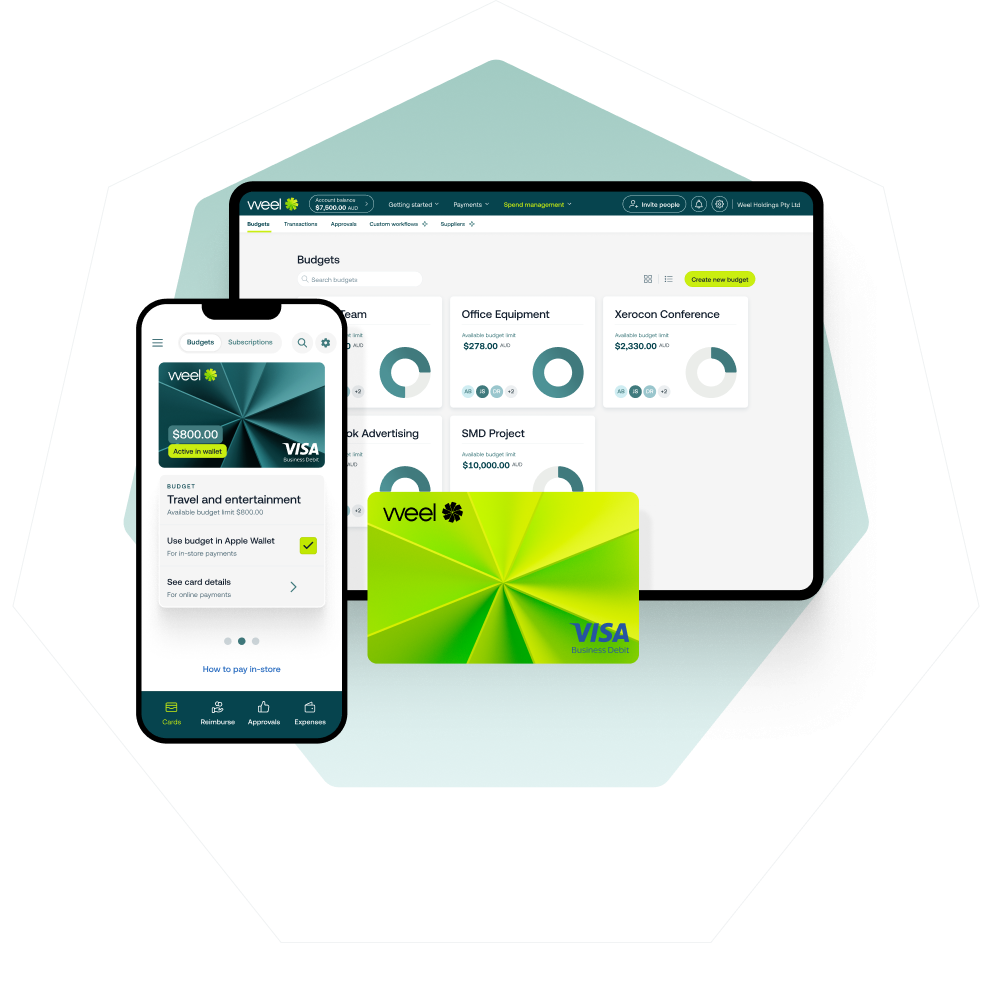
Weel closes every stage of the expense loop automatically — from receipt capture through to accounting sync. Corporate cards issue with spend limits and policy rules built in. When Weel AI is active, receipt scanning captures and codes expenses at the point of spend. Approval workflows route every transaction to the right approver, with automatic escalation built in if no action is taken.
The results are verifiable: over 90% of card expenses on Weel reach full manager approval. Half are fully approved within 24 hours. Businesses using Weel's approval workflows reach 95% expense completion — and median time from card swipe to accounting sync is 2.3 days.
Reimbursements close the same way: 95% fully paid, with half paid within 24 hours of submission.
That's what "Every Expense Complete." means in practice. Finance on Autopilot. Every receipt captured, every approval closed, books ready before month-end arrives. Weel means done.
The right expense management system makes month-end a non-event
An expense management system that leaves gaps — missing receipts, stalled approvals, manual reconciliation — isn't a complete system. It's a process with holes that your finance team fills every month without anyone tallying the cost.
The right system closes every loop automatically, so your team arrives at month-end with everything already done.
Book a demo or take the product tour at letsweel.com to see how Weel closes every expense loop from capture to close.