






For finance managers, that means fewer surprises at month-end and fewer policy exceptions to chase down after the fact. For finance ops and office managers issuing cards across the business, it means never physically collecting a card back from someone leaving the company, or ringing a bank to freeze one that's gone missing. The right virtual card turns expense control from a monthly clean-up job into something that happens automatically, transaction by transaction.
What is a virtual corporate card?

A virtual corporate card is a card number issued digitally, tied to a business bank account or credit facility, with no physical card ever printed. It works anywhere a card number is accepted: online checkout, subscription billing, ad platforms, one-off supplier payments. Finance teams issue virtual corporate cards on demand: one per vendor, one per project, one per employee, each with its own limits and rules attached from the moment it's created.
That flexibility is what makes virtual cards a control mechanism, not just a payment method. A physical card's limits are set once and forgotten. A virtual card's limits are set per use case and can be tightened, loosened, or switched off the moment circumstances change.
The control capabilities that actually matter
Not every virtual card provider treats "controls" the same way. Some stop at a single spend limit per card. The ones worth choosing go further.
Spend limits that stop spend, not just flag it
A real spend limit blocks the transaction at the point of sale if it exceeds the amount set. It doesn't wait for a report to surface the overspend three weeks later. Limits should be settable per card, per category, and per time period (daily, weekly, monthly), so a marketing card capped at $2,000 a month can't quietly become $2,400 because nobody was watching.
Limits should also stack. A card capped at $500 a month for a specific category can sit alongside a separate per-transaction ceiling, so a $5,000 annual software licence charged once and a rogue $150 lunch on the same card are caught by two different rules, not one blanket number that's either too loose or too tight to be useful.
When evaluating a provider, ask what actually happens the second a transaction exceeds the limit: does it decline, or does it just get logged for someone to notice later? Only the first one is a control.
Merchant and category locks
Category locks restrict a card to a type of spend (software subscriptions, travel, office supplies), so a card issued for one purpose can't drift into another. Merchant locks go further, tying a card to a single vendor by name. Both stop the classic failure mode of a card issued for one job being used, deliberately or not, for something else entirely.
Single-use and merchant-locked virtual cards
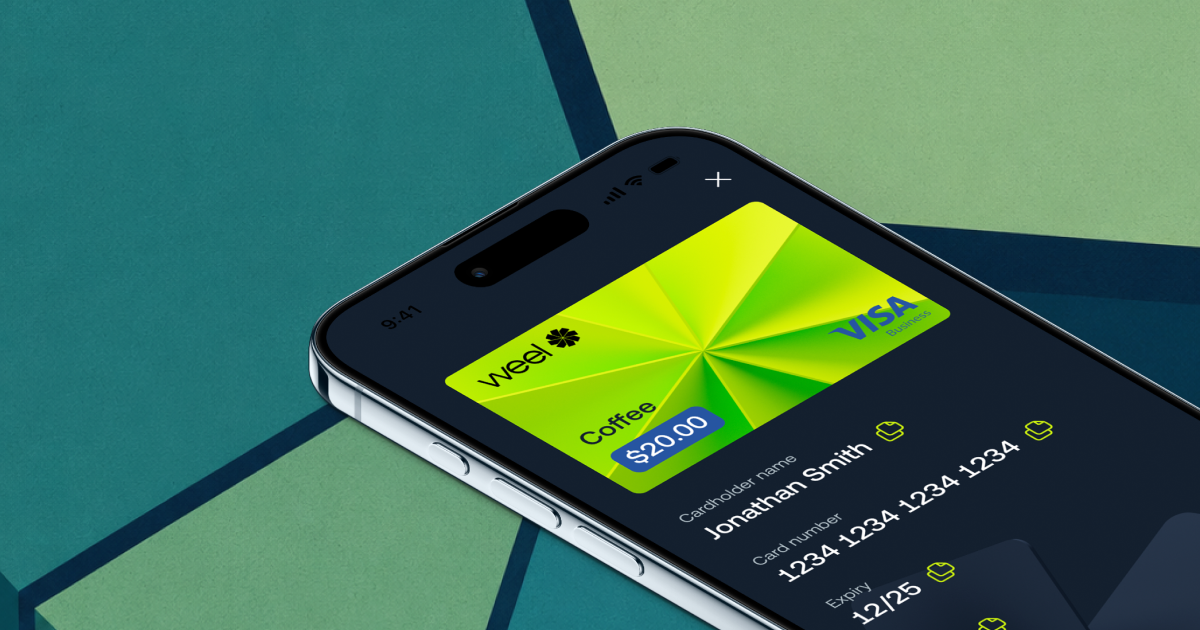
Single-use virtual cards generate a fresh card number for one transaction and one amount, then close automatically. They're built for exactly the moments that create the most policy exceptions: a one-off supplier payment, a conference registration, a trial subscription that shouldn't be allowed to auto-renew into a real cost. Once the transaction clears, the card can't be charged again, so there's no forgotten subscription quietly billing every month on a card nobody's checked in a year.
Real-time approval routing
Approval routing decides, before money moves, whether a transaction needs a manager's sign-off, and does it automatically, based on the policy already set, not a monthly audit. A purchase over a threshold, outside a category, or from a new vendor should route to the right approver immediately, with the transaction held or flagged until it's actioned.
This is the single biggest difference between a card that controls spend and one that just reports on it afterwards. Reporting tells you what happened. Real-time routing decides what's allowed to happen.
Instant freeze and cancellation
Cards get lost. People leave. A subscription turns out to be a mistake. The test of a good provider is how fast a card can be shut off: from an app, in seconds, by whoever holds the admin permissions, without a phone call to a bank or a wait for a replacement to arrive. A card that takes a support ticket to freeze isn't a control tool; it's a liability sitting in someone's wallet.
Fraud prevention built into the card
Virtual cards should carry fraud protection as a default, not an add-on: card numbers that can be regenerated without changing the underlying account, transaction alerts the moment a charge is attempted, and the ability to lock a card to a specific merchant so a stolen number is useless anywhere else. A card number that only ever gets used once, for one vendor, for one amount, is a much smaller target than a static card number sitting in a dozen recurring billing systems.
This matters more than it sounds. A physical card number that leaks (through a skimmer, a data breach, or a compromised vendor) stays valid until someone notices and cancels it. A virtual card built around single-use or merchant-locked numbers narrows that exposure automatically. If a number is only ever presented to one vendor, a charge from anywhere else is rejected before it becomes a fraud claim someone has to chase down after the fact.
How to evaluate a provider against these controls
Run any shortlist through the same questions:
- Can limits be set per card, per category, and per time period, and do they actually block spend, or just flag it?
- Does approval routing happen before the transaction settles, or only in a report afterwards?
- Can a card be locked to a single merchant or a single transaction?
- Can any card be frozen or cancelled instantly, without contacting support?
- Are these controls native to the card, or bolted on through a separate expense tool?
A provider that can't answer all five clearly isn't offering expense controls; it's offering a card with a spending report attached.
How Weel stands out
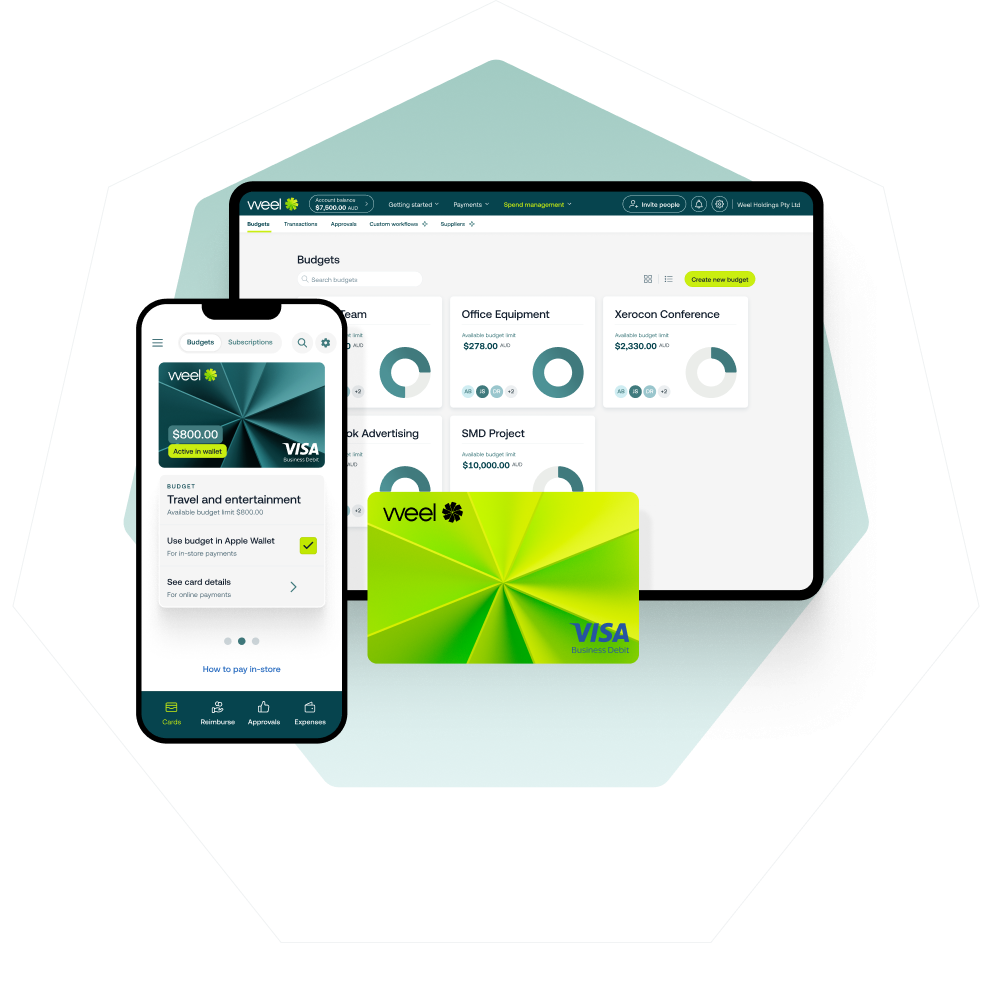
Weel builds expense controls into the card itself, not into a report checked after the money's gone. Spend limits, merchant locks, and category restrictions sit on the card from the moment it's issued. Policy enforcement and approval routing happen in real time: a transaction outside policy routes to a manager before it settles, not at month-end.
The numbers back it up. Across Weel's customer base, half of all card transactions are fully manager-approved within 24 hours, and over 90% reach full manager approval. Businesses running approval workflows through Weel's expense management complete 94.8% of expenses, a 7-point lift over the 88.0% completion rate for businesses without workflows.
Any team member with the right permissions freezes or cancels a card instantly from the Weel app, with no calls to a bank and no waiting on a replacement. Single-use virtual cards lock spend to one merchant, one amount, one transaction, closing the door on subscription creep and one-off purchases that drift past their original purpose.
Weel's cards, approvals, and policies sit in one platform, used by 4,000+ businesses across Australia and New Zealand. Book a demo to see the controls applied to your own spend policy.
The bottom line
The best virtual corporate card for expense controls is the one that stops out-of-policy spend before it happens, not the one that reports on it afterwards. Spend limits that actually decline, merchant and category locks, single-use cards, real-time approval routing, and instant freeze: those five things separate a genuine control platform from a card with a dashboard attached. For finance managers, that means policy that enforces itself. For finance ops teams, it means fewer cards to chase and fewer surprises to explain.