




Updated September 2026 - So, what are the key challenges of expense management for a dispersed team of remote workers? And how can an expense management platform like Weel help to minimise these pain points?
The continuing rise in remote working
Hybrid and remote work arrangements have moved well beyond temporary disruption. ABS data from August 2025 shows that 36% of employed Australians usually work from home, with that figure climbing to 59% among managers and professionals. Meanwhile, research from McCrindle puts the hybrid workforce at 45% of all Australian workers, splitting their time between office and remote locations.
Many companies, both large and small, have restructured their working practices around this reality. Nearly half the workforce now spends part of each week outside a central office. The question is no longer whether remote work will persist, but how well your financial processes keep up. When your team is no longer working permanently from a central office HQ, this can seriously affect your oversight of key operational and financial processes in the business.
In short, when your team is not in the same building, three things get harder to see. What they’re working on, how much company money they’re spending, and how well they’re progressing against targets and budgets.

5 reasons why expense management is difficult for dispersed teams
Dispersed teams ‘succeed fast and fail slow’ according to research from the Harvard Business Review. Your remote team may be more efficient than co-located teams. But with members in different districts, cities or even different countries and timezones, company policies struggle to stay universal and expense guidelines are harder to follow.
With zero (or highly limited) face-to-face time as a team, the processes, rules and good practice around expenses can gradually begin to slip.
- A temptation to overspend on expenses When remote team members have access to a company card, there’s very little oversight of what they’re spending. It’s easy for people to slip into bad habits: overspending, ignoring budget limits or making unauthorised purchases. According to a Weel study of 326 small businesses, 18% of business owners said they had caught someone making a purchase that was personal, not approved or not allowed in their business’s expense categories.
- Diminished control over spending for the finance team When multiple remote workers share one company card, the accounts payable team loses visibility over who spent what and when. Without an expense management system built for distributed teams, this gap only widens as headcount grows, reducing your awareness of outgoings and your ability to manage cash flow.
- Poor security of card details and transactions With a dispersed team, physical card details have to be shared via email, Slack or company chats. Without proper VPNs or end-to-end encryption, this increases the risk of card details being intercepted online and transactions being hacked.
- Difficulty in replacing compromised cards When a company card is compromised or the details hacked, the card needs to be blocked and replaced by the bank. All of this takes time to action. The longer it takes to cancel, the more time there is for malicious hackers to spend your company money.
- Slow reimbursement for expenses Remote workers have to pay for certain business-related expenses, including travel expense management costs, out of their own pockets. They then face a long wait to get their money back while expense claims are processed and bank payments made. This becomes a cash-flow issue for your people’s personal finances.
The shift to hybrid and remote work has lifted productivity, but it’s clear that a modern approach is needed for managing remote expenses. This is where dedicated remote employee expense management software earns its place: it replaces ad hoc reimbursement with real-time controls that scale with a dispersed team.
Weel is your ideal remote expense management platform
Cloud technology underpins how distributed teams operate today. The range of cloud-based platforms, apps and digital tools makes it possible to run your business systems from anywhere, so your expense management software should work the same way. Unlike legacy expense tracking software built around a single office, an expense management system like Weel is built for teams that rarely share a desk.
A digital expense management platform, like Weel, slots into your remote app stack and brings you an effective online system for managing your dispersed team’s expenses.
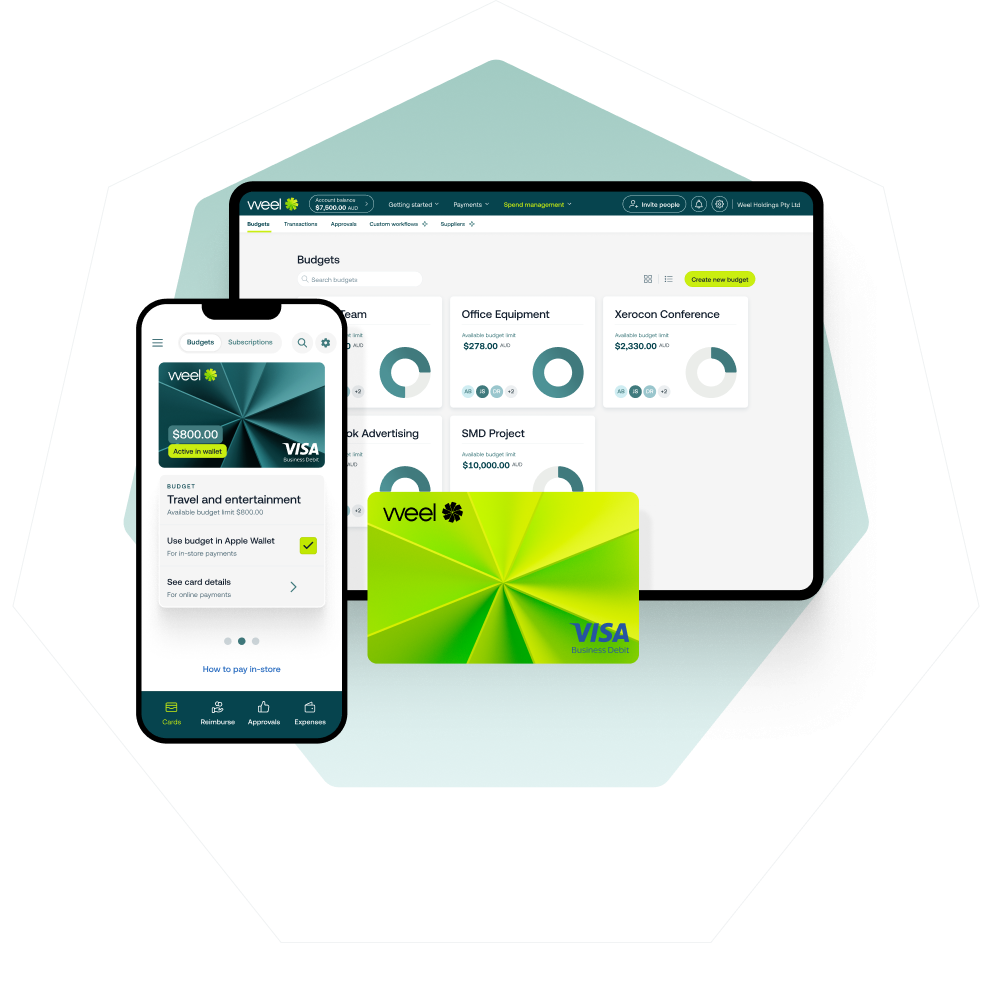
- Virtual cards on mobile devices – virtual corporate cards are easy to set up remotely when people are not in the same office as the finance team or approver. This turns a phone into a business expense app your team can use anywhere.
- Allocated budgets and card controls – remote workers can manage their own spending via discrete cards assigned to a specific budget. Each card comes with set rules and controls, so remote spending doesn’t get out of hand.
- No need for expense claims – remote workers can use their own virtual card to pay for ad-hoc expenses, using company money and removing the need for expense claims.
- Real-time reporting – the finance team gets full oversight of all expenses made by the remote team through real-time reporting, so an expense manager always knows where spend stands.
- Easy replacement of cards – virtual cards can be blocked instantly if details are compromised, with a new one set up almost immediately.
Get in full control of remote expenses
Dispersed teams are a defining feature of how Australian businesses operate. With remote work now a permanent reality for many organisations, it’s important to have an expense management system that’s ready for it. There’s no shortage of expense management solutions on the market, but few are built specifically around teams that rarely sit in the same room. Whether you call it spend management software, a spend management platform or simply expense software, the goal is the same: control without friction.
Take a look at Weel, a purpose-built option among expense management software Australia businesses already rely on. See how a centralised approach removes the remote working hurdles and puts you back in control of spending.
Book a demo today and bring the power of Weel to your remote workers.